
AI Is Already Being Used Across Your Business: Here’s Where Risk Starts
Most Teams Can’t See Where AI Is Creating Data and Decision Risk
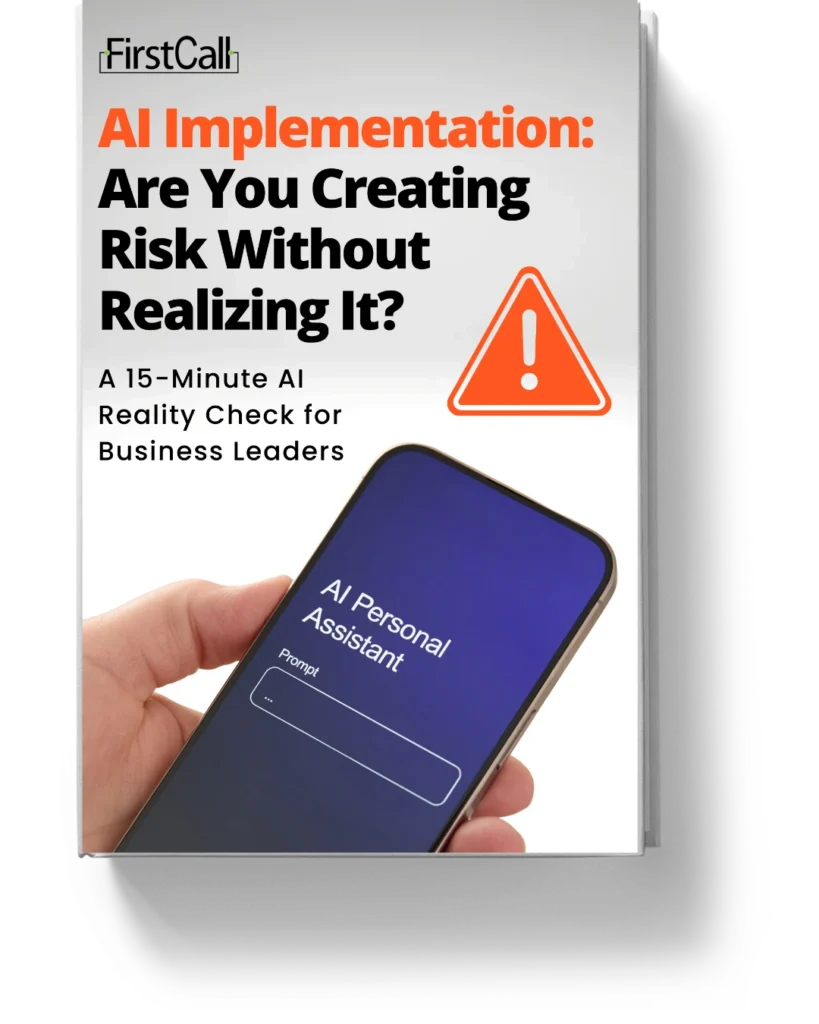
A 15-minute reality check to help you understand how AI is being used across your organization and where gaps may already exist.
How AI Enters Your Business Without Oversight or Review
Small AI Shortcuts Turn Into Untracked Usage Across Teams
AI usually enters through small decisions.
Someone finds a faster way to draft an email. A report gets summarized in seconds. A feature appears inside a tool your team already uses, and it saves time right away.
No rollout. No formal plan. Just progress.
After a while, it becomes harder to answer simple questions. Where is AI being used? What data is being shared? Who is reviewing the output before it goes out?
This assessment gives you a way to step back and look at what is already in motion.
What This AI Risk Assessment Reveals
Where AI Is Used, What Data Is Exposed, and Where Oversight Breaks Down
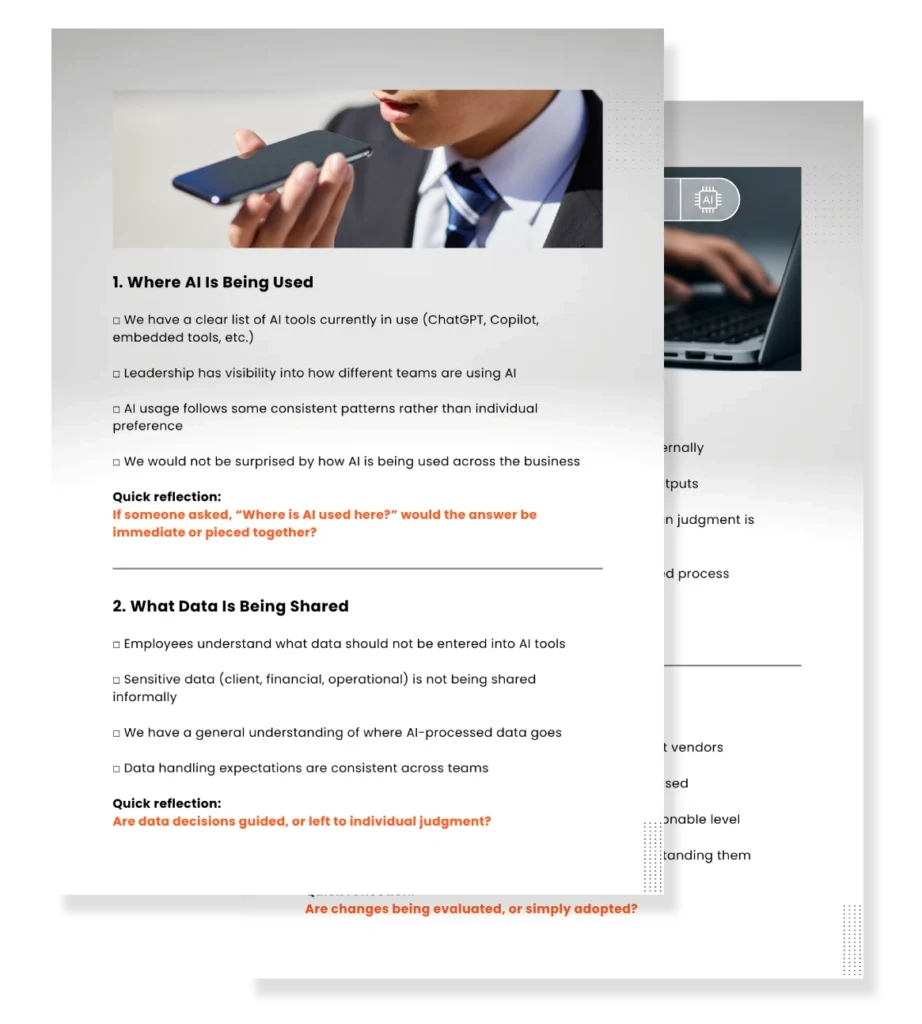
In about 15 minutes, you will be able to:
- See where AI is actively being used across your organization
- Recognize where sensitive or internal data may be entering these tools
- Understand how decisions are being influenced by AI-generated output
- Notice where vendor features may have introduced new exposure
- Get a feel for whether AI is helping workflows or creating rework
No prep needed. Answer based on what you already know.
Who Needs Visibility Into AI Usage Before It Becomes a Problem
Leaders Responsible for AI Risk Without a Clear View of What’s in Use
This is built for organizations where AI has started to show up in daily work.

Owners and
executives
Operations and administrative leaders

IT and technology decision-makers
Teams responsible for internal processes or risk
If people on your team are using AI in any capacity, this will help you make sense of it.
AI Usage Expands Faster Than Visibility Across Your Organization
As AI Spreads Across Teams, It Becomes Harder to Track and Control
- AI adoption tends to move faster than internal alignment.
- Teams figure out what works and keep using it. Over time, usage spreads across departments. Each group develops its own habits. Some tools connect directly to systems. Others rely on manual input.
At that point, visibility depends on who you ask.
Questions start taking longer to answer. Not because something is broken, but because no one has pulled everything together in one place.
Start With a 15-Minute AI Usage and Risk Assessment
Get a Clear View of Where AI Is Already Embedded in Your Workflows
This takes about 15 minutes.
You do not need technical detail. You do not need perfect answers.
You are looking for a clear sense of what you can explain today and where things feel uncertain.
What You Learn After Reviewing Your AI Usage and Risk Gaps
Review It Once and See Where AI Usage Is Clear vs. Uncertain
There is no follow-up sequence waiting behind this.
You go through the checklist, compare what you expected with what you found, and decide if anything needs a closer look.
That’s it.
Unclear Answers Usually Point to Hidden AI Risk and Ownership Gaps
Uncertainty Around AI Usage Often Signals Missing Oversight
Some sections will be easy to answer.
Others may feel less certain. That hesitation is useful. It usually points to places where usage has outpaced visibility or where responsibility is shared but not clearly defined.
You do not need to solve that immediately. You just need to see it.
The Next Step
Start With a TechStack Review to Map AI Usage, Data Flow, and Risk
If you want to go deeper, we can walk through it with you.
In a working session, we will:
- Map how AI and other tools are being used across your environment
- Clarify where data is moving and who is responsible for it
- Identify gaps that could create issues during growth, audits, or incidents
- Outline next steps that fit how your business already operates
No pressure. No overcomplication. Just a clearer understanding of what is in place and what needs attention.
Helping businesses stay secure, operational, and confident as technology continues to evolve.