
IT Services for Montana Nonprofits
Every Dollar Spent on IT That Doesn’t Support Your Mission Is a Dollar That Didn’t Do the Work
First Call is a strategic partner of the Montana Nonprofit Association and has worked with Montana nonprofits including the YWCA Missoula, Big Brothers Big Sisters of Northwest Montana, Tamarack Grief Resource Center, Action Inc., and the Missoula Food Bank. We understand how nonprofit IT decisions get made and what the technology environment of a mission-driven organization actually looks like.20-minute working session. No sales pitch. You’ll leave with a clear picture of where things stand.
Nonprofits We Work With in Montana
We're a Strategic Partner of the Montana Nonprofit Association. We Know This Sector.
The nonprofits we work with range from direct service organizations with multiple programs and dozens of staff to smaller organizations where the executive director is also the de facto IT administrator. What they have in common is that technology decisions carry real consequences for the people they serve, and the resources available to make those decisions are limited.
- The YWCA Missoula, Big Brothers Big Sisters of Northwest Montana, Tamarack Grief Resource Center, Action Inc., and the Missoula Food Bank are among the Montana nonprofits we've supported.
- These organizations serve vulnerable populations and handle sensitive personal information.
- When their systems go down or their data is compromised, it affects real people depending on real services. We approach nonprofit IT with that weight in mind.




Why Nonprofit IT Has Its Own Set of Pressures
Mission-Driven Organizations Carry Real Technology Obligations With Constrained Resources
Nonprofits that handle client data carry data protection obligations that parallel those of regulated industries. Organizations providing health-related services may have HIPAA obligations. Those handling data about children may have COPPA considerations. Those receiving federal grants are subject to the data security and reporting requirements tied to those funding sources. These aren’t obligations that disappear because the organization is mission-driven rather than profit-driven.
Staff turnover is a persistent reality in the nonprofit sector. When an IT environment depends on institutional knowledge held by specific individuals, staff changes create knowledge gaps that show up at the worst possible moments. A donor database that only one person knows how to back up properly, a security configuration that was set up years ago and never documented, a vendor relationship with no written agreement in place: these are the patterns that surface when a key person leaves.
Where Montana Nonprofit IT Risk Concentrates
Four Patterns That Show Up Across Nonprofit Environments

Client and donor data without formal access controls
Nonprofits accumulate sensitive data about clients, donors, and program participants across CRM platforms, case management systems, email, and shared drives. When access to that data isn’t formally controlled and reviewed, former staff and volunteers retain access longer than they should. The organization’s liability exposure grows with every user account that isn’t promptly deactivated.
IT decisions made reactively rather than planned
When technology spending has to compete with program funding, planned investment cycles don’t happen. Equipment gets replaced when it fails rather than before it does. Software renewals get missed. Security updates get deferred. The result is an environment that runs on older infrastructure than its risk profile warrants, with gaps that accumulate until something goes wrong at a critical moment.
No IT support structure when something goes wrong
Many smaller nonprofits have no formal IT support arrangement. When a server fails or ransomware hits, the executive director is calling a friend or a local shop that doesn’t know the environment. The recovery takes days instead of hours, and the costs, financial and operational, land directly on program capacity.
Grant reporting requirements that depend on technology working
Federal and state grants carry data security and reporting requirements that assume a functioning, documented IT environment. When a grant audit asks about data handling practices, access controls, or incident response procedures, a nonprofit without documented IT policies is in a difficult position regardless of how carefully it has actually managed its data.
If these patterns describe your organization, the TechStack Challenge is a practical way to get a clear picture of where things actually stand and what to address first.
Data Protection and Compliance IT Support for Montana Nonprofits
The Data Nonprofits Hold About the People They Serve Deserves the Same Protection as Any Regulated Industry
Nonprofits that provide health-related services, mental health support, or medical case management operate as HIPAA covered entities or business associates depending on how they’re structured. Organizations like the YWCA Missoula and Tamarack Grief Resource Center handle deeply personal information about people in vulnerable situations. HIPAA’s Privacy Rule and Security Rule apply to that information in the same way they apply to a medical clinic’s patient records.
Organizations that serve children may have COPPA obligations around any online platforms used in direct service delivery. Those receiving federal grants through programs like HHS, SAMHSA, or HUD are subject to data security requirements tied to that funding. And all nonprofits handling personally identifiable information about clients or program participants carry state-level data breach notification obligations under Montana law.
- Documenting your data handling practices and access controls is what lets you demonstrate to funders, board members, and the communities you serve that the organization handles sensitive information responsibly.
- That demonstration matters whether or not a formal audit ever happens.
Turn Compliance Worry Into a Clear, Prioritized List. Free.
You have just read the data obligations a nonprofit carries, from HIPAA to grant requirements, usually with the fewest resources to meet them. The free 30-minute Compliance Reality Check is built for exactly that. It costs nothing and takes half an hour, so it fits a tight budget and a thin staff. You come away with a concrete, prioritized list you can work through as funding allows, and something credible to show your board and funders as evidence of due diligence.
Free resource. 30 minutes. A practical baseline across your data security obligations.

IT Support Services for Montana Nonprofits
Built Around Mission Impact, Responsible Data Stewardship, and Nonprofit Budget Realities

Reliable day-to-day IT support
Your staff have a team they can call when something stops working. Tickets get resolved rather than deferred. When a program coordinator can’t access the case management system or the development director’s email goes down before a grant deadline, someone picks up.
IT planning aligned to funding cycles
We help nonprofit leadership plan technology investment on a timeline that fits grant cycles, board approval processes, and annual budget reviews. The IT Budget Planner is a useful tool for building that conversation with your board and finance committee before budget season.

Client and donor data protection
Access controls, documented data handling practices, and regular access reviews so that the sensitive information your organization holds is managed to a standard you can demonstrate to funders, auditors, and the people whose data it is.

Documentation that survives staff turnover
Every system, configuration, and vendor relationship in your environment is documented to a standard that any staff member or board member can pick up. Personnel changes don’t create knowledge gaps, and auditors get documentation that reflects how things actually work.
Security monitoring and incident response
Continuous monitoring, endpoint protection, and a tested incident response plan. For organizations with HIPAA obligations or more complex security requirements, our Advanced Cybersecurity service provides the depth to manage those programs without requiring in-house security expertise.
Full management or co-managed support
Smaller nonprofits without dedicated IT staff work with us through Done For You IT. Organizations with an internal IT coordinator who needs backup work with us through Done With You IT. Both models are sized and priced around nonprofit operational realities.
Cybersecurity for Montana Nonprofits
Nonprofits Are Targeted Precisely Because Attackers Know the Security Resources Are Thin
When ransomware hits a food bank or a crisis counseling service, the disruption doesn’t stay inside the organization. The people depending on those services feel it immediately. Attackers target nonprofits deliberately: valuable personal data about clients and donors, typically thin IT and security resources, and the service obligations that create pressure to restore operations quickly. Food banks, crisis services, and community health organizations have all experienced ransomware attacks that interrupted the programs their communities depend on.
- Phishing targeting nonprofit staff is the most common initial access vector.
- Staff handling donor relations, grant applications, and community outreach receive high volumes of external email.
- A convincing email appearing to come from a foundation program officer, a government grant agency, or a major donor is exactly the kind of message that gets opened and clicked.
- Staff who aren't regularly trained on what these attempts look like are a persistent vulnerability regardless of what technical controls are in place.
Advanced Cybersecurity Program
Our program for Montana nonprofits covers:
- Email security and phishing defense
- Endpoint protection across staff devices
- Security monitoring with nonprofit-specific detection logic
- Incident response planning with procedures aligned to Montana's breach notification requirements
- Security awareness training built around the specific social engineering approaches targeting nonprofit staff and leadership.
Done For You IT vs Done With You IT for Montana Nonprofits
The Right Model Depends on the Size of Your Organization and Whether You Have Dedicated IT Staff
Done For You IT
Nonprofits without dedicated IT staff work with us through Done For You IT. First Call takes complete responsibility for the IT environment: infrastructure, security, vendor management, compliance documentation, and day-to-day support. Your executive director and program staff have a team they can call. Your board has a clear point of accountability for technology. And the environment that auditors and funders see reflects how things actually run.
Done With You IT
Larger nonprofits with an internal IT coordinator or operations staff member who carries IT responsibilities work with us through Done With You IT. Your team stays in control of the environment and the decisions. We provide additional engineering capacity, security depth, and specialist support in the areas where a small nonprofit IT function is stretched, particularly around security monitoring and compliance documentation.
20-minute working session. No sales pitch. You’ll leave with a clear picture of where things stand.
IT Services for Montana Nonprofits: Why First Call
We're a Strategic Partner of the Montana Nonprofit Association. This Sector Is Part of How We Work.
We’re a strategic partner of the Montana Nonprofit Association, which reflects an ongoing relationship with the sector rather than a vendor arrangement. We understand that nonprofit IT decisions are made differently: budget approval goes through boards, technology spending gets measured against program impact, and the cost of IT disruption lands directly on the people an organization exists to serve. We structure our engagements around those realities.
Staff turnover is a persistent challenge in the nonprofit sector, and IT environments that depend on institutional knowledge held by specific individuals are vulnerable to it. Every environment we manage is documented to a standard where a new staff member, an incoming operations director, or a board member stepping in during a transition can understand what exists and how it runs. Personnel changes don’t create knowledge gaps.

For nonprofits with HIPAA obligations, the data protection requirements are the same as any healthcare provider. Our IT services for Montana healthcare covers that framework in detail. For nonprofits that operate in partnership with government agencies or administer public programs, our IT services for Montana government covers the compliance context that applies in those environments.
Work With a Montana IT Partner That Understands Nonprofits
Let's Start With a Clear Picture of Where Your IT Stands
The TechStack Challenge is a 20-minute working session. We look at how your systems are structured, where your data protection documentation has gaps, and what deserves attention first given your budget and compliance obligations. You leave with a clear and honest picture of what’s working, what isn’t, and what to prioritize.
If you’d prefer to start with a self-assessment, the 30-minute Compliance Reality Check covers the key data protection frameworks in a format your leadership team can work through independently.
20-minute working session. No sales pitch. You’ll leave with a clear picture of where things stand.
Blogs & Recent News
Insights for Montana Nonprofit Industry
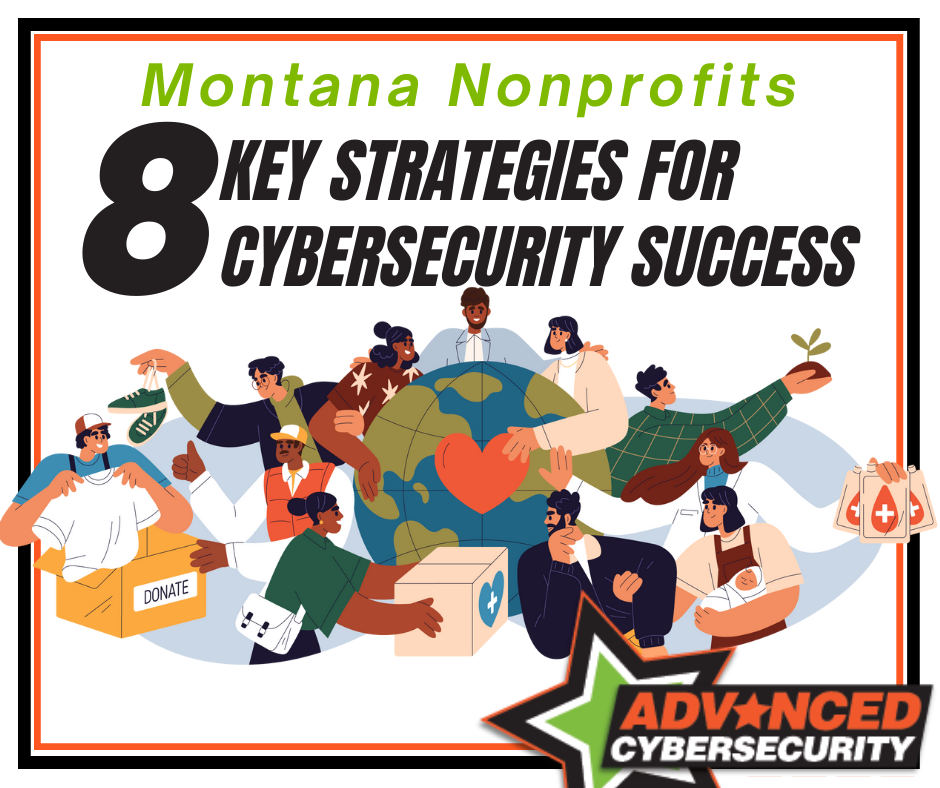
Safeguarding Montana Nonprofits: Best Cybersecurity Practices for Staying Safe Online
In today’s digital age, cybersecurity is of paramount importance for
IT Services for Montana Nonprofits: Frequently Asked Questions
Questions We Hear Most Often
It depends on the services your organization provides. Nonprofits that provide health care services, mental health counseling, case management that involves health information, or employee health programs are likely covered entities or business associates under HIPAA. Organizations like community health centers, crisis counseling services, and grief support centers often have HIPAA obligations that aren't immediately obvious from their nonprofit status. If your organization handles any information about physical or mental health conditions, treatment, or payment for health services, a HIPAA review is worth doing before assuming it doesn't apply.
Federal grants through agencies like HHS, SAMHSA, HUD, and DOJ carry data security requirements that are tied to the grant agreement. These requirements vary by agency and program but commonly include provisions around data storage, access controls, breach notification, and record retention. When a grant audit or program review asks about your data handling practices, an organization with documented IT policies and access controls is in a substantially better position than one without. We help nonprofits document their IT environment and data handling practices in a format that holds up to funder scrutiny.
For most Montana nonprofits, the most immediate risks are ransomware and phishing, followed by inadequate access controls on client and donor data. Ransomware attacks on nonprofits interrupt services and can result in permanent data loss if backups aren't current and tested. Phishing attacks succeed when staff aren't trained to recognize them. Access control gaps mean that former staff and volunteers retain access to sensitive data longer than they should. All three of these are addressable without large IT budgets. What they require is a deliberate approach and consistent maintenance.
We structure nonprofit engagements around the operational reality of the sector. That means flat monthly pricing so your board can plan around a predictable number, scope that reflects what an organization your size actually needs rather than a standard commercial package, and planning conversations that account for grant cycles and funding constraints. The TechStack Challenge gives us the information we need to give you a specific number for your situation.
Done For You IT is the right fit for nonprofits without dedicated IT staff where First Call manages the full environment. Done With You IT works for larger organizations with an internal IT coordinator or operations staff member who needs additional capacity and specialist support. Your team stays in control. We provide the depth behind them. The TechStack Challenge will help clarify which model fits your current situation.
Documentation that survives staff turnover is one of the specific things we build into every nonprofit engagement. Every system, configuration, vendor relationship, and access credential is documented to a standard where a new staff member or a board member stepping in during a transition can understand what exists and how it works. We treat the documentation as part of the service, not an afterthought. When someone leaves, their departure doesn't take institutional IT knowledge with them.
Yes. Nonprofits that administer government programs, hold contracts with state or federal agencies, or operate as fiscal agents for public funding share many of the compliance obligations that apply to government agencies directly. Our IT services for Montana government covers that compliance environment in detail, and we can build IT support programs that address both the nonprofit operational context and the government compliance obligations from the same engagement.
We've supported Montana nonprofits including the YWCA Missoula, Big Brothers Big Sisters of Northwest Montana, Tamarack Grief Resource Center, Action Inc., and the Missoula Food Bank, along with other organizations across the state. We're a strategic partner of the Montana Nonprofit Association, which reflects an ongoing relationship with the sector rather than a transactional one. The TechStack Challenge is the right starting point for any Montana nonprofit evaluating IT support options.