
IT Services for Montana Healthcare Providers
Your EHR Goes Down. Your Clinicians Can’t Chart. Your Patients Wait. Healthcare IT Has No Margin for Instability.
Most of the healthcare organizations we work with aren’t struggling because of bad decisions or under-qualified staff. They’re managing a genuinely complex environment where clinical demands, HIPAA compliance obligations, vendor relationships, and limited IT resources all operate simultaneously. First Call has supported Montana healthcare organizations for over two decades. We build IT programs around what that environment actually requires.
20-minute working session. No sales pitch. You’ll leave with a clear picture of where things stand.
Healthcare Organizations We Work With in Montana
We've Supported Montana Healthcare for Over 20 Years. Here's Who We Typically Work With.
Independent practices and clinics across primary care, specialty medicine, dental, behavioral health, and eye care. These organizations often don’t have dedicated IT staff. They need a complete IT partner that understands clinical workflows, handles HIPAA compliance documentation, and manages vendor BAAs without requiring practice leadership to become IT experts.
- Mid-size practices, multi-location groups, community hospitals, home care organizations, and mental health providers where an internal IT lead or small team is managing EHR infrastructure, endpoint support, security, and compliance simultaneously
- The team is capable but the scope has grown past what their headcount can sustain alone
- These organizations need engineering depth and security expertise behind them, not a replacement for their existing IT leadership. .














Why Healthcare IT Is More Complex Than Most Providers Realize
Clinical Systems, HIPAA Obligations, and Vendor Complexity All Operate in the Same Environment
Healthcare IT operates under pressures that most industries don’t face simultaneously. EHR and EMR platforms are not administrative tools. Clinicians depend on them in real time during patient encounters. When access is slow, unreliable, or unavailable, it directly affects the quality and efficiency of care.
HIPAA applies across the full IT environment in ways that are easy to underestimate. The Privacy Rule governs how protected health information is used and disclosed. The Security Rule requires specific administrative, physical, and technical safeguards for electronic protected health information.
The Breach Notification Rule establishes a 60-day notification requirement following a breach of unsecured protected health information. And Business Associate Agreements extend those obligations to every vendor with access to patient data, including your IT provider, EHR vendor, cloud backup provider, and telehealth platform. A vendor’s assurance of HIPAA compliance is not a substitute for a signed BAA.
Where Montana Healthcare IT Risk Concentrates
Four Patterns That Show Up Across Clinical Environments

BAA gaps in vendor relationships
Most healthcare organizations have more vendors with access to protected health information than they realize. EHR, billing, scheduling, telehealth, cloud backup, email, remote access tools: each one that touches patient data requires a signed BAA. When a new vendor is onboarded without an IT review, or an existing BAA lapses without renewal, that gap exists until someone looks for it.

Medical devices on the network without security oversight
Connected medical devices and imaging equipment run software that is often difficult to patch on a standard IT schedule because vendors require testing and approval cycles. These devices sit on clinical networks for years in configurations that may not have been reassessed since installation. They’re a persistent vulnerability in environments that are otherwise actively maintained.

Incident response plans that haven’t been tested
HIPAA’s Breach Notification Rule starts a 60-day clock from discovery. An untested incident response plan is one where no one has verified how long discovery actually takes, who makes the notification decision, and who drafts the required communications. Testing reveals those gaps before an incident does.
Access controls that reflect staffing at onboarding, not today
Healthcare has significant staff turnover. When access to EHR systems, billing platforms, and clinical networks isn’t revoked promptly when staff leave or change roles, former employees retain access to protected health information they no longer need. Regular access control reviews catch this. Reviews that happen only during audits don’t.
If these patterns describe your environment, the TechStack Challenge is a practical starting point for understanding what’s actually happening and what to address first.
HIPAA Compliance IT Support for Montana Healthcare Providers
HIPAA Compliance Isn't a One-Time Project. It's How Your Systems Have to Run Every Day.
The HIPAA Security Rule organizes its requirements into administrative, physical, and technical safeguards. Administrative safeguards include your security management process, assigned security responsibility, workforce training, access management procedures, and contingency planning. Physical safeguards cover facility access controls, workstation use policies, and device and media controls. Technical safeguards govern access controls, audit logging, integrity controls, and transmission security. Some requirements apply to all covered entities. Others are addressable, meaning you must either implement them or document why an equivalent alternative is in place. That distinction matters during audits and is frequently misunderstood.
The Breach Notification Rule requires notification to affected individuals within 60 days of discovering the breach. What constitutes a breach and which exceptions apply is determined by a four-factor risk assessment. These decisions carry legal weight and should involve your legal counsel alongside your IT and compliance team. We help you build the incident response procedures that support that process before you need them.

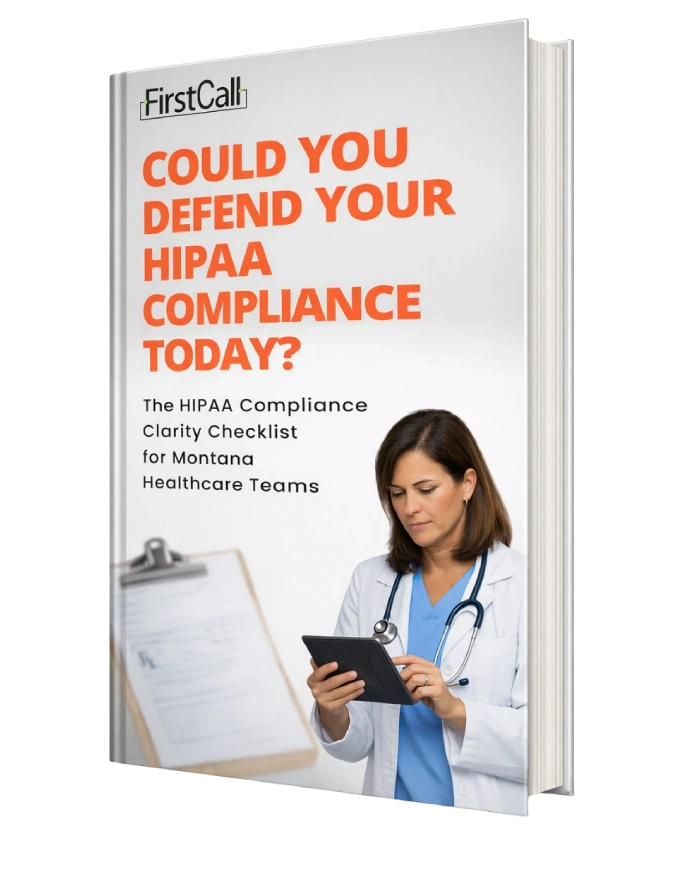
Free HIPAA Compliance Checklist
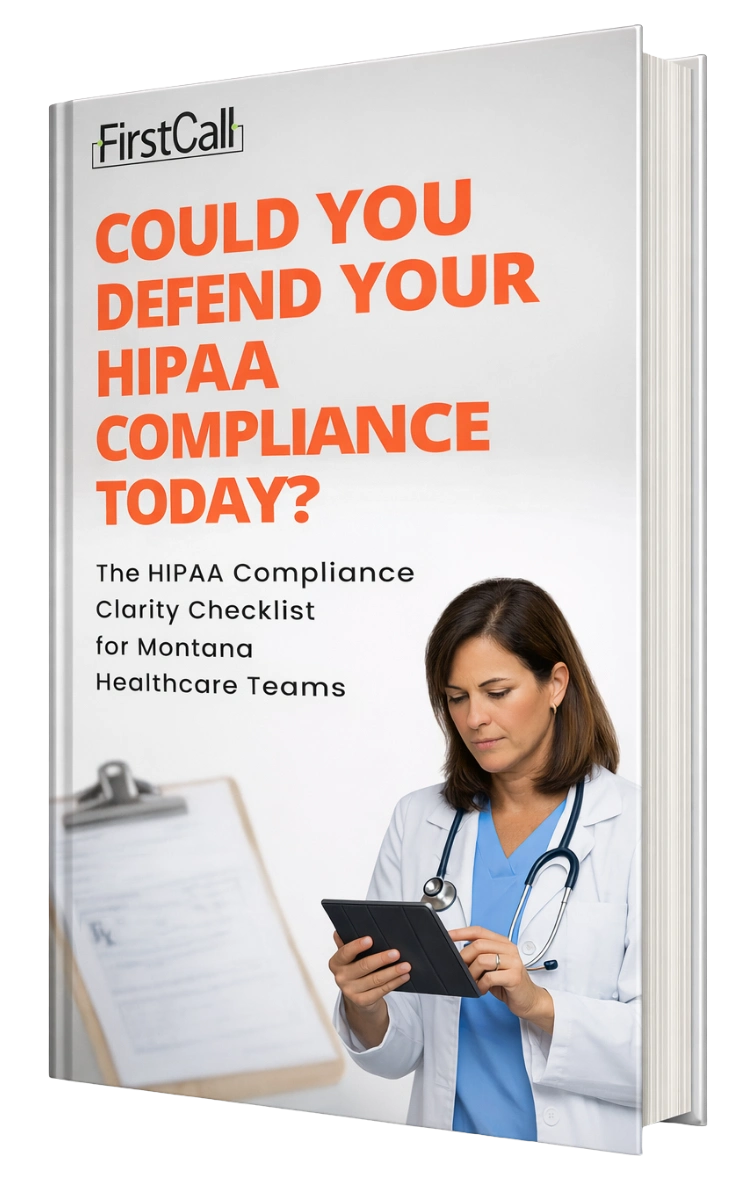
We’ve put together a HIPAA compliance checklist for Montana clinics that covers Security Rule requirements across all three safeguard categories. It’s a practical tool for understanding where your current program stands before a more detailed assessment.
Free resource. Covers all three HIPAA Security Rule safeguard categories. Built for Montana healthcare providers.
IT Support Services for Montana Healthcare Providers
Built Around Clinical Continuity, Patient Data Protection, and the Specific Demands of Healthcare IT

EHR and clinical system support
We support the infrastructure and integration environment surrounding your EHR platform. Whether you’re on Epic, athenahealth, eClinicalWorks, DrChrono, or another system, we manage the network, endpoints, and connectivity your clinical systems depend on. When your EHR vendor needs to coordinate with your IT environment, we handle that conversation.
HIPAA-aligned security monitoring and incident response
Continuous monitoring, endpoint protection, email security, and a tested incident response plan aligned to HIPAA’s 60-day Breach Notification Rule timeline. For practices with more complex security programs, our Advanced Cybersecurity service provides vCISO support, 24/7 SIEM monitoring, and healthcare-specific security engineering.

BAA management and vendor oversight
We help maintain your vendor inventory, identify which vendors require BAAs, and ensure agreements are signed and current. We operate under a BAA as part of every healthcare engagement. That’s not a compliance formality. It’s an operational commitment backed by the security controls and incident response procedures to match.

Telehealth infrastructure support
Telehealth platforms require secure, reliable connectivity and HIPAA-compliant configuration. We manage the infrastructure supporting telehealth delivery and ensure that the platforms your providers use have signed BAAs in place and meet the technical requirements for protected health information handling.

Medical device security and network segmentation
Connected medical devices that can’t be patched on a standard schedule are isolated through network segmentation so a vulnerability in one device doesn’t create a path into your clinical or administrative systems. We document every device on your network and its security status.
Full management or co-managed support
Smaller practices and clinics without dedicated IT staff work with us through Done For You IT. Larger practices and health systems with an internal IT lead work with us through Done With You IT. Both models include a signed BAA and are built around HIPAA’s requirements for covered entities and business associates.
Who We Work With in Healthcare
Healthcare isn’t one type of organization. Each environment has its own systems, workflows, and pressures.
We work with:
- Clinics and Medical Practices
- Dental Practices
- Specialty Practices
- Hospitals and Healthcare Facilities
Each comes with different challenges, but the same need: systems that support care instead of slowing it down.
Cybersecurity for Montana Healthcare Providers
Healthcare Is the Highest-Value Ransomware Target in the Country. Patient Data Is Why.
Healthcare has been the most frequently targeted sector for ransomware attacks for several years running. A complete patient record contains far more personally identifiable information than a financial record: name, address, date of birth, Social Security number, insurance information, and detailed medical history. That data has significant value on criminal markets, and the disruption of clinical operations creates immediate pressure to restore access that makes healthcare organizations more likely to consider paying quickly.
- Phishing targeting clinical and administrative staff is the most consistent initial access vector in healthcare breaches
- Staff handling patient scheduling, insurance coordination, and referral communications receive high volumes of external email and are natural targets for credential harvesting
- Unpatched medical devices on the clinical network are a persistent entry point
- Third-party vendor breaches through business associates with inadequate security controls are a growing source of healthcare data exposure.
Advanced Cybersecurity Program
Our Advanced Cybersecurity program for Montana healthcare providers covers:
- Email security and phishing defense configured for clinical environments
- Endpoint protection across staff workstations and clinical devices
- Network segmentation isolating medical devices from administrative systems
- 24/7 monitoring with healthcare-specific detection logic
- Incident response planning aligned to HIPAA's 60-day Breach Notification Rule timeline
- Security awareness training built around the social engineering approaches that specifically target healthcare staff
Done For You IT vs Done With You IT for Montana Healthcare
The Right Model Depends on How Your Practice or Organization Is Currently Structured

Done For You IT
Independent practices, clinics, dental offices, and smaller healthcare organizations without dedicated IT staff work with us through Done For You IT. First Call takes complete responsibility for the IT environment: clinical system infrastructure, security, BAA management, HIPAA compliance documentation, and day-to-day support. Practice leadership has a clear IT accountability structure that holds up under audit.

Done With You IT
Larger practices and health systems with an internal IT lead or IT team work with us through Done With You IT. Your IT team stays in control of the environment and the decisions. We provide additional engineering capacity, security depth, and HIPAA compliance support in the areas where a small healthcare IT team is stretched across EHR infrastructure, medical device oversight, vendor BAA management, and day-to-day support simultaneously.
20-minute working session. No sales pitch. You’ll leave with a clear picture of where things stand.
IT Services for Montana Healthcare Providers: Why First Call
Healthcare Is Our Deepest Industry Practice. We've Earned That Through 20 Years of Montana Healthcare Relationships.
We’ve worked with independent practices, dental offices, mental health providers, home care organizations, orthopedic specialists, eye care clinics, and community hospitals across Montana. The client list on this page reflects over two decades of healthcare IT relationships, not a recent pivot into a new vertical.
We’ve supported healthcare organizations in Missoula, Bozeman, Billings, Kalispell, Great Falls, Helena, Hamilton, Butte, Mineral County, and McCone County.
We’re familiar with the EHR platforms Montana practices run on, the Montana Hospital Association environment, the Montana Primary Care Association network, and the specific pressures that rural and frontier healthcare providers face. We provide a signed BAA as part of every healthcare engagement, and every environment we manage is documented to a standard where your vendor agreements are current and your security controls can be demonstrated when an auditor asks.
Advanced Cybersecurity Program
For practices and health systems with complex security requirements or significant HIPAA compliance program needs, we provide vCISO support through our Advanced Cybersecurity service:
- A named security advisor who understands HIPAA's Security Rule requirements
- Reviews your program against current HHS guidance
- Gives practice leadership a clear and current picture of where your security program stands
Work With a Montana IT Partner That Understands Healthcare
Let's Start With a Clear Picture of Where Your IT and Compliance Program Stands
The TechStack Challenge is a 20-minute working session. We look at how your clinical and administrative systems are structured, where your HIPAA compliance documentation has gaps, and what deserves attention first. You leave with a clear and honest picture of what’s working, what isn’t, and what to prioritize.
If you’d prefer to start with a self-assessment, our HIPAA compliance checklist for Montana clinics covers the Security Rule’s administrative, physical, and technical safeguard requirements in a format your team can work through before a conversation with us.
20-minute working session. No sales pitch. You’ll leave with a clear picture of where things stand.
Blogs & Recent News
Insights for Schools and Education Leaders
How Healthcare Organizations Benefit From IT Partnerships
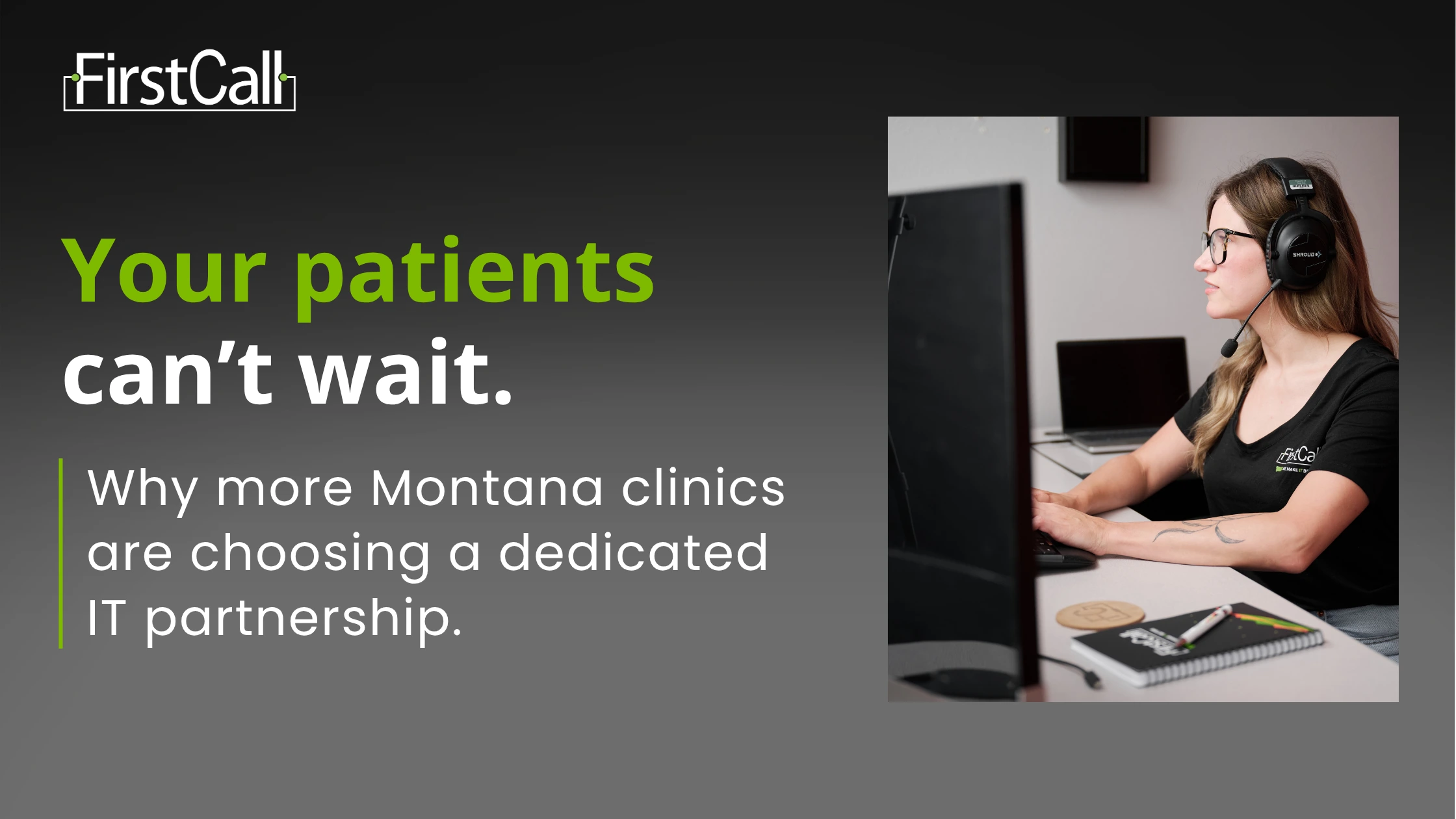
Healthcare organizations depend on IT differently than most industries do. A patient record that goes inaccessible for an hour can delay actual patient care. A missed security patch means protected health information sitting exposed, a real compliance and patient-trust problem, not a hypothetical one. That is why more Montana hospitals, clinics, and healthcare nonprofits are moving to a dedicated IT partnership instead of treating technology as an occasional fix, brought in only after something has already gone wrong.

The HIPAA Risk Hiding in Your Dental Software
Dental practices sit in an interesting position when it comes to cybersecurity. The clinical side of the business runs on specialized software, imaging systems, and patient management platforms that most IT environments never have to think about. The administrative side handles protected health information every single day. And the team keeping everything running is usually small, focused on patient care, and not thinking about either of those things at the same time.
IT Services for Montana Healthcare Providers: Frequently Asked Questions
Questions We Hear Most Often
The Security Rule organizes its requirements into administrative, physical, and technical safeguards. Administrative safeguards cover your security management process, designated security responsibility, workforce training, access management procedures, and contingency planning including backup and disaster recovery. Physical safeguards address facility access controls, workstation policies, and device and media handling. Technical safeguards govern access controls, audit logging, data integrity controls, and transmission security. Some requirements apply to all covered entities. Others are addressable, meaning you must implement them or document why an equivalent alternative is in place. That distinction matters and is frequently misunderstood.
A Business Associate Agreement is a contract that establishes HIPAA compliance obligations for vendors with access to protected health information. Every vendor that creates, receives, maintains, or transmits PHI on your behalf is a business associate and requires a signed BAA. That includes your EHR vendor, billing company, telehealth platform, cloud backup provider, email platform if it carries clinical communications, and your IT provider. We provide a signed BAA as part of every healthcare engagement and help you identify which other vendors in your environment require one.
The Breach Notification Rule requires covered entities to notify affected individuals, HHS, and in some cases prominent media outlets following a breach of unsecured protected health information. Notification to individuals must occur within 60 days of discovering the breach. What constitutes a breach and which situations fall under exceptions is determined by a four-factor risk assessment. These decisions carry legal weight and should involve your legal counsel alongside your IT and compliance team.
Connected medical devices and imaging equipment that can't be patched on a standard IT schedule are managed through network segmentation. We isolate clinical devices on separate network segments so a vulnerability in one piece of equipment doesn't create a path into your administrative systems or EHR environment. We document every device on your network, its operating system and firmware version, its patch status, and its segmentation configuration.
Done For You IT is the right fit for independent practices and smaller healthcare organizations without dedicated IT staff where First Call manages the full environment including HIPAA compliance documentation and BAA management. Done With You IT works for larger practices and health systems with an internal IT lead that need additional capacity, security depth, and compliance support. Your IT team stays in control. We provide the resources behind them. The TechStack Challenge will help clarify which model fits your current situation.
Telehealth platforms require reliable connectivity, HIPAA-compliant configuration, and integration with your EHR environment. We manage the network and endpoint infrastructure that telehealth delivery depends on, ensure that the platforms your providers use have signed BAAs in place, and address the access control requirements that apply when clinical staff connect from outside the office.
We work with a wide range of Montana healthcare organizations including independent medical practices, dental offices, orthopedic and specialty clinics, eye care providers, mental health organizations, home care providers, and community hospitals across Missoula, Bozeman, Billings, Kalispell, Great Falls, Helena, Hamilton, Butte, and smaller communities. We're also familiar with the needs of Montana government health agencies and schools with student health data obligations.
Yes. First Call operates as a business associate for every healthcare organization we support, and we provide a signed Business Associate Agreement as part of every healthcare engagement. We don't treat the BAA as a compliance formality. We treat it as the operational commitment it is: that we will handle protected health information according to HIPAA's requirements throughout our relationship, backed by the security controls and incident response procedures to match.