

IT Services for Montana Schools and School Districts
When Technology Works, Teachers Teach. When It Doesn’t, Everyone Feels It.
First Call has worked with Montana school districts and education organizations for over two decades. We understand how education IT actually operates: lean technology teams supporting hundreds of devices, federal compliance obligations requiring specific technical controls, budget cycles tied to funding sources that don’t always align with when equipment needs replacing, and a student population whose data carries the highest protection standards in any sector.
20-minute working session. No sales pitch. You’ll leave with a clear picture of where things stand.
Schools and Districts We Work With in Montana
Most Districts We Support Fall Into One of These Situations
Smaller districts with one technology coordinator or no dedicated IT staff at all, where device support, network maintenance, compliance documentation, and vendor relationships fall to whoever has the most technical background on staff. These districts need a complete IT partner, not just break-fix support.
- Mid-size and larger districts with a technology director or small IT team that is doing good work but running at capacity
- Projects get pushed because support requests fill the day
- These districts need engineering depth and backup, not a replacement for their existing leadership
- If either of those descriptions fits your district, you're in the same position as most Montana school districts your size. .





Why School District IT Is Harder Than It Looks
Education IT Has to Serve Students, Staff, Compliance, and the Budget Cycle Simultaneously
School district IT environments are genuinely complex. A single district might support hundreds or thousands of devices across multiple buildings, serving students ranging from elementary-age children to adults, staff with varying technical comfort levels, and administrative systems handling everything from payroll to student health records. That’s a wide surface area to secure and support, and in most Montana districts it’s managed by a small team.
The compliance framework grows more layered every year. FERPA governs student educational records. COPPA sets specific requirements for online services used by students under 13. Montana state education data privacy laws add a state-specific layer. School districts with school resource officers may have CJIS obligations. Schools handling student health data may have HIPAA considerations. All of these apply simultaneously and all require active, ongoing management, within budget cycles that don’t always align with when equipment needs to be replaced.
Where Montana School District IT Risk Concentrates
Four Patterns That Show Up Across Education Environments

Student data spread across systems with inconsistent controls
Student records exist in student information systems, learning management platforms, assessment tools, health record systems, and communication platforms. FERPA applies to all of them. When those systems don’t share a consistent access control framework, the compliance picture is harder to demonstrate and harder to audit.

Devices that move between students, classrooms, and home environments
One-to-one device programs mean school equipment regularly leaves the building. Devices that go home connect to networks outside the district’s control and return with configurations they didn’t leave with. Managing that through mobile device management rather than network controls alone is a requirement, not an option.

Ransomware exposure from under-defended, high-value targets
Schools are among the most frequently targeted ransomware victims in the country. Valuable student data, service obligations during the academic year, and limited security resources make districts productive targets. Detection and response capability is the right answer, not just awareness training.
IT capacity that peaks at the worst possible moments
The start of the school year, standardized testing windows, and the days after a break are when IT reliability matters most and when issues surface most visibly. These are also the moments when an under-resourced IT team is most stretched.
If these patterns describe your district’s environment, the TechStack Challenge is a practical starting point for understanding what’s happening and what deserves attention first.
FERPA and Student Data Compliance IT Support for Montana Schools
Student Privacy Isn't Just a Policy Requirement. It's the Foundation of Parent and Community Trust.
FERPA gives parents and eligible students rights over educational records and places specific obligations on schools around access, disclosure, and protection. In IT terms, that means appropriate access controls on every system holding student data, data processing agreements with every third-party vendor accessing student records, and documented breach response procedures. FERPA doesn’t specify a breach notification timeline, but state law often does, and the damage to community trust from a disclosed breach of student records is immediate.
COPPA applies to any online service directed at children under 13 or where the operator knows users include children that age. Schools using the school consent exception take on responsibility for ensuring vendors comply with COPPA’s requirements. A vendor data processing agreement doesn’t automatically satisfy that obligation. We help districts understand which tools are in use across classrooms and what the data handling practices of each one actually are.

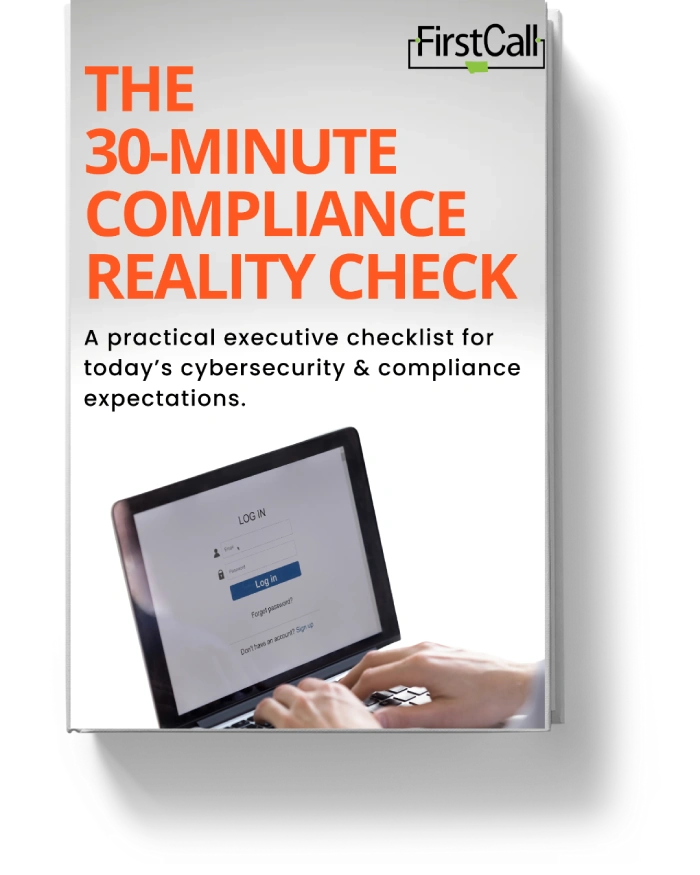
Free 30-Minute Compliance Reality Check
The 30-minute Compliance Reality Check is a useful starting point for district leadership and IT teams who want to understand where their current compliance posture stands before a more detailed review.
Free resource. 30 minutes. A practical baseline across your compliance obligations.
IT Support Services for Montana Schools and Districts
Built Around Instructional Continuity, Student Data Protection, and Education Budgets

Device management across student and staff endpoints
Mobile device management for student devices, consistent configuration across classrooms and buildings, and a clear process for devices that leave campus and return. Your IT team stops spending the start of every school day troubleshooting configurations that changed overnight.
Security monitoring and ransomware defense
Continuous monitoring, endpoint protection, email security, and a tested incident response plan. For districts that need a deeper security program, our Advanced Cybersecurity service covers vCISO support, 24/7 SIEM monitoring, and security engineering for education environments where student data protection is the primary concern.

Student data compliance and vendor management
We help maintain your vendor inventory, ensure data processing agreements are in place for ed-tech tools that touch student data, and document your compliance posture across FERPA, COPPA, and state requirements. When a parent or auditor asks how student data is protected, your team has specific answers.
IT planning aligned to education funding cycles
Credit unions without dedicated IT staff work with us through Done For You IT. Credit unions with an internal IT lead who needs backup work with us through Done With You IT. Both models are built around the compliance and operational requirements of member-owned financial institutions.

Network reliability for instructional environments
Classroom network performance, bandwidth management during peak usage periods, and connectivity planning that accounts for E-Rate funding requirements. The network is the foundation that every other educational technology depends on.
Full management or co-managed support
Smaller districts without dedicated IT staff work with us through Done For You IT. Districts with a technology director or IT team work with us through Done With You IT.
Cybersecurity for Montana Schools and School Districts
Schools Are a High-Value Ransomware Target. The Student Data They Hold Is Part of Why.
Student records are among the most sensitive personal data in existence. A student’s educational record follows them for life. Combine that with limited security resources, high device counts that are difficult to fully control, and service obligations during the academic year that create pressure to restore operations quickly, and you have a sector that attackers have identified as reliably productive.
- Phishing targeting school staff is the most common initial access vector.
- Staff who handle external communications, admissions inquiries, or vendor relationships receive high volumes of outside email and are natural targets for credential harvesting
- Student devices connecting to outside networks and returning with changed configurations are a persistent entry poin
- Third-party ed-tech vendors with student data access through poorly managed integrations are a supply chain risk that grows with every platform a classroom teacher adopts without IT review
Advanced Cybersecurity Program
Our Advanced Cybersecurity program for Montana schools covers:
- Email security and phishing defense configured for education environments
- Endpoint protection and mobile device management
- 24/7 monitoring with education sector-specific detection logic
- Incident response planning aligned to student data breach notification requirements
- Security awareness training designed for staff who aren't technology professionals but carry significant data access responsibilities
Done For You IT vs Done With You IT for Montana Schools
The Right Model Depends on Whether Your District Has Dedicated Technology Staff
Done For You IT
Smaller districts without a dedicated technology director or IT staff work with us through Done For You IT. First Call takes complete responsibility for the technology environment: device management, network infrastructure, security, student data compliance documentation, and day-to-day support. District leadership has a clear point of accountability for technology.
Done With You IT
Districts with a technology director or internal IT team work with us through Done With You IT. Your technology team stays in control of the environment and the decisions. We provide additional engineering capacity, security depth, and specialist support in the areas where a small district IT team is stretched across device deployment, network infrastructure, compliance, and classroom support simultaneously.
20-minute working session. No sales pitch. You’ll leave with a clear picture of where things stand.
IT Services for Montana Schools: Why First Call
We've Worked With Montana Schools for Over 20 Years. We Know What Instruction Depends On.
Working with schools is different from working with other organizations. The mission is clear and it matters: students learning. Every IT decision connects back to whether teachers can teach and whether students can access what they need. We approach education IT with that priority visible in everything we do.
We’ve supported school districts and education organizations across Montana including in Missoula, Bozeman, Billings, Kalispell, Great Falls, Helena, White Sulphur Springs, and Powell County
We’re familiar with the Montana Office of Public Instruction environment, E-Rate program requirements, and the student data privacy framework that governs how schools manage technology in this state. Every environment we manage is documented to a standard where your vendor agreements are current and your security controls can be demonstrated when a parent, auditor, or incident investigator asks.
Advanced Cybersecurity Program
Montana school districts operate as government entities and share many of the same structural pressures as cities and counties.
- Our IT services for Montana government covers that context
- For districts where student health data creates HIPAA considerations
- Our IT services for Montana healthcare covers the relevant framework.
Work With a Montana IT Partner That Understands Education
Let's Start With a Clear Picture of Where Your District's IT Stands
The TechStack Challenge is a 20-minute working session. We look at how your systems are structured across buildings and departments, where your student data compliance documentation has gaps, and what deserves attention first. You leave with a clear and honest picture of what’s working, what isn’t, and what to prioritize.
If you’d prefer to start with a self-assessment, the 30-minute Compliance Reality Check covers the key compliance frameworks in a format your leadership team can work through independently.
20-minute working session. No sales pitch. You’ll leave with a clear picture of where things stand.
Blogs & Recent News
Insights for Schools and Education Leaders
Is It Time To Trade In Your Old Operating System?
It may not come as a surprise that operating
IT Services for Montana Schools: Frequently Asked Questions
Questions We Hear Most Often
FERPA gives parents and eligible students rights over educational records and places specific obligations on schools around access, disclosure, and protection of those records. In IT terms, that means appropriate access controls on every system holding student data, data processing agreements with every third-party vendor accessing student records, documented disclosure practices, and a breach response process. Your IT environment needs to reflect your FERPA obligations continuously, not just when a review is scheduled.
COPPA applies to online services directed at children under 13 or where the operator knows users include children that age. Schools that use the school consent exception take on responsibility for ensuring vendors comply with COPPA's requirements. A vendor data processing agreement doesn't automatically satisfy that obligation. We help districts understand which tools are in use across classrooms and what the data handling practices of each one actually are.
Schools hold valuable student data, operate under service obligations during the academic year that create pressure to restore operations quickly, and often have less mature security programs than comparably sized organizations in regulated industries. The most common entry points are phishing targeting staff, student devices connecting to outside networks, and third-party vendor integrations with insufficient access controls.
We manage mobile device management configuration, consistent endpoint settings across classrooms and buildings, and a clear process for devices that leave campus and return. That includes policies for what happens when a student device connects to an outside network, how software updates are pushed without disrupting classroom use, and how lost or stolen devices are remotely managed.
Done For You IT is the right fit for smaller districts without dedicated technology staff where First Call manages the full environment. Done With You IT works for districts with a technology director or IT team that needs additional capacity, engineering depth, and security support. Your technology team stays in control. The TechStack Challenge will help clarify which model fits your current situation.
We help districts understand how their network infrastructure plans align with E-Rate eligibility requirements and support the documentation that E-Rate audits require. We make sure your technology planning and infrastructure decisions are informed by E-Rate eligibility from the start, rather than discovering a compliance issue after a project is underway.
School staff aren't technology professionals, but they carry significant responsibility for student data. Our security awareness training for education environments is built around the actual threats staff encounter: phishing that mimics parent communications or vendor invoices, and the specific risks that come with shared device environments. Training is practical and specific, not a compliance checkbox exercise.
Yes. Montana school districts operate as government entities and sometimes share IT infrastructure or compliance obligations with municipal partners. Our IT services for Montana cities and counties covers the government IT environment in detail. If your district has overlapping needs with a municipal partner, we can build an IT support program that addresses both contexts from a single coordinated relationship.