




What We’re Seeing with AI in Real Business Environments
AI rarely enters an organization as a formal initiative. It usually starts much smaller than that. Someone uses it to rewrite an email. Another tests it to summarize notes. A team experiments with it to speed up research or reporting. Nothing structured. Nothing announced. Just people finding ways to make their day a little easier. And then, gradually, it becomes part of how work gets done. This is happening across most teams we support right now. Not as a transformation project, but as a quiet, organic shift that is already underway. We are sharing what we are seeing because understanding the pattern makes it easier to navigate as it continues to develop. Some of what we have noticed is also genuinely useful to know. How AI Is Actually Showing Up Day to Day Across the environments we support, AI adoption does not look like a rollout. It looks like quiet, individual usage that spreads over time. Different roles use it in different ways: None of this is unusual. In fact, it is becoming expected. What stands out is not that people are using AI. It is how quickly it becomes embedded without much visibility, and how unevenly that happens across a single organization. Some teams lean into it heavily. Others have not touched it. Some individuals rely on it daily. Others are not sure where it fits. From the outside, it can look like nothing has changed. From the inside, workflows are already shifting. What We’re Paying Attention To When AI starts showing up across an environment, there are five areas we pay particular attention to. Not to create restrictions, but to make sure there is enough clarity that it keeps working in your favor rather than quietly creating inconsistency. Where AI is actually being usedWe look for patterns across teams and tools. Which departments are engaging with it, what platforms are being accessed, and how frequently it is showing up in day-to-day work. In one environment we support, we noticed AI usage had become deeply embedded in one department while the rest of the organization had not engaged with it at all. Nobody planned it that way. It simply evolved. Understanding that picture is the starting point for everything else. What data is being shared with these toolsThis is often the most important piece. AI tools are only as useful as the information they are given. That also means sensitive or internal data can be introduced without much thought. We pay attention to where that risk might exist and help create clarity around what should and should not be shared, before it becomes a habit that is harder to revisit. How it interacts with existing systemsIn some cases AI is layered on top of tools your team already uses. In others it sits completely outside them. Understanding how it connects, or does not connect, to your core systems helps avoid duplication, inconsistency, or confusion down the line. We have seen cases where two teams were using different AI tools to produce the same type of output with no awareness of each other. That creates its own set of challenges. Whether it is creating efficiency or just moving the work aroundNot all usage leads to better outcomes. Sometimes AI genuinely speeds things up. Other times it introduces rework, particularly if outputs need significant review or correction before they are usable. We look at whether it is actually improving workflows or simply shifting where the effort lands. How confident teams feel using itAdoption is not just about access. It is about confidence. Some teams use AI freely and effectively. Others hesitate because they are unsure how it fits or whether they are using it correctly. That variation matters more than it might seem. It shapes how consistently and how well it gets used across the organization as a whole. None of these are unusual on their own. In fact, we expect to see some version of each across most environments. The value comes from watching them consistently, not reacting to them later. A Familiar Example In one environment we support, AI usage had grown quickly within a single department. They were using it regularly to draft content, summarize documents, and support internal communication. It was saving time and clearly adding value. At the same time, other teams were not using it at all. There was no shared understanding of what tools were being used, what data was appropriate to include, or how outputs should be reviewed. Nothing was wrong. But the experience was inconsistent, and the team had started to notice it. We worked with the leadership team to bring some light structure around it. Not a formal policy, just a shared understanding of where AI fits, what to be mindful of, and how to use it effectively across the whole team. The result was not less usage. It was more consistent usage, with fewer questions and better outcomes across the board. Why We’re Sharing This AI is moving quickly, but adoption inside organizations is happening in a very human way. People try things, keep what works, and ignore what does not. That means the technology often becomes part of the workflow before the organization has fully caught up with it. That is not a problem in itself. But it does mean that a little clarity, applied early and lightly, tends to make a meaningful difference to how smoothly things develop from there. Like the security patterns we have written about before, AI is one of those areas where a lot can be happening beneath the surface without it being immediately visible. Sharing what we are seeing across environments is part of keeping that picture clear for the teams we work with. If you are curious how this is showing up in your own environment, it is always worth a conversation. More often than not, there is something useful in simply talking through what you are already seeing. FAQ Are most businesses actively implementing AI right now?Not in a formal
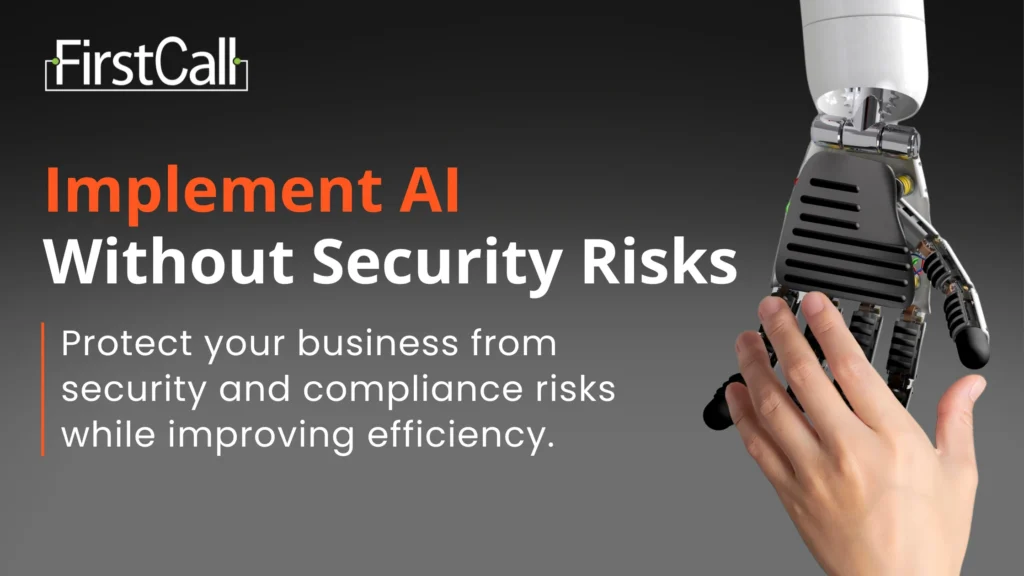
Implement AI Without Security Risks
It rarely starts with a big announcement. Someone on your team finds a tool that helps them write faster or organize information. They try it. It saves time. A few others follow. Before long, AI is part of daily work in ways no one formally planned. At first, it feels like progress. Then a question comes up in a leadership meeting.“Are we sure this is safe?” That’s where most businesses pause. Not because AI isn’t useful, but because it showed up before there was a clear way to manage it. The Hidden Risk Behind AI Implementation AI implementation often happens quietly. Teams experiment. Tools spread. Decisions start to rely on AI-generated output. But without structure, those small changes create gaps that are hard to track. This is where shadow AI begins to take shape. Employees use tools with good intent, but without shared standards or visibility. The risk isn’t obvious at first. It builds over time: None of this comes from carelessness. It comes from momentum without guidance. Why AI Implementation Needs Structure Now AI is moving faster than internal policies. At the same time, expectations around data protection and compliance are becoming more defined. Clients are asking better questions. Insurance providers want proof. Regulations are becoming easier to enforce. AI touches all of it. It influences communication, reporting, documentation, and customer interactions. These are the same areas where audits and risk reviews tend to focus. There’s also something else to consider. AI doesn’t clean up complexity. It amplifies it. If systems are unclear or disconnected, AI accelerates those gaps. If things are aligned, it strengthens them. That’s why structure matters more than speed. What Safe AI Implementation Looks Like Safe AI implementation doesn’t begin with tools. It begins with understanding how your business already operates. Where data lives. From there, AI becomes an extension of your environment instead of a separate risk. If you’re already reviewing your systems for alignment, this is a natural place to connect AI into your broader Advanced Cybersecurity & Compliance approach. Signs Your AI Use May Be Creating Risk Many businesses are further along than they think. The question is whether it’s coordinated. You may be exposed if: These are not failures. They’re signals that AI has outpaced your structure. A Practical Framework for AI Implementation You don’t need a complex rollout. You need a clear one. 1. Start With VisibilityUnderstand what tools are already in use and where. 2. Set Clear BoundariesDefine what data can be used, which tools are approved, and how outputs should be reviewed. 3. Align With ComplianceMap AI usage to your existing requirements. If something doesn’t fit, adjust early. 4. Standardize ToolsLimit the number of platforms to reduce confusion and improve oversight. 5. Train Your TeamGive people confidence in how to use AI responsibly and effectively. 6. Review RegularlyCheck in on usage and adjust as your business evolves. If you want a simple way to walk through this process, start with our AI Integration Checklist. Start With Clarity Before adding more tools or expanding usage, it helps to understand how everything connects. Take the TechStack Challenge to get a clear picture of your systems, data flow, and where AI fits safely into your business. This is a working session designed to give you clarity, not overwhelm. A Quick Example One organization believed they hadn’t started using AI. After a short review, they found it in three areas: None of it was coordinated. Within a few weeks, they aligned on approved tools, created simple usage guidelines, and trained their team. What changed wasn’t just risk. The team became more confident. Adoption improved. Decisions became more consistent. Where Security and Compliance Fit AI doesn’t replace your security or compliance efforts. It relies on them. When systems are aligned and processes are clear, AI helps teams move faster with confidence. It supports documentation, improves consistency, and reduces manual effort. When those foundations are unclear, AI introduces uncertainty. If you’re already working toward better alignment, this connects directly to how you reduce IT risk across your business. Watch: AI and Risk in Business Watch this short overview to understand how AI, data, and compliance intersect in real business environments. *Video Coming Soon For additional perspective, IBM offers a helpful overview of how AI works in business environments and where risks can emerge: https://www.ibm.com/topics/artificial-intelligence. Progress Without the Risk You don’t need to rush into AI. And you don’t need to avoid it. The businesses getting the most value are taking a steady approach. They’re building clarity first, then expanding with confidence. AI works best when it supports your people and fits into how your business already runs. Take the Next Step If you want to move forward with AI implementation without second-guessing security or compliance, start with clarity. Take the TechStack Challenge and see where you stand today. Or, if you prefer a conversation, talk with our team. We’ll help you map out a practical path that fits your business. FAQs Is AI implementation safe for businesses?Yes, when it’s structured. Risk comes from uncoordinated use, not the technology itself. What is shadow AI?It’s when employees use AI tools without oversight or policy, which can introduce data and compliance risks. Do we need an AI policy?A simple policy creates consistency and helps your team use AI with confidence. Where should we start?Start by understanding current usage, then define boundaries, standardize tools, and train your team.
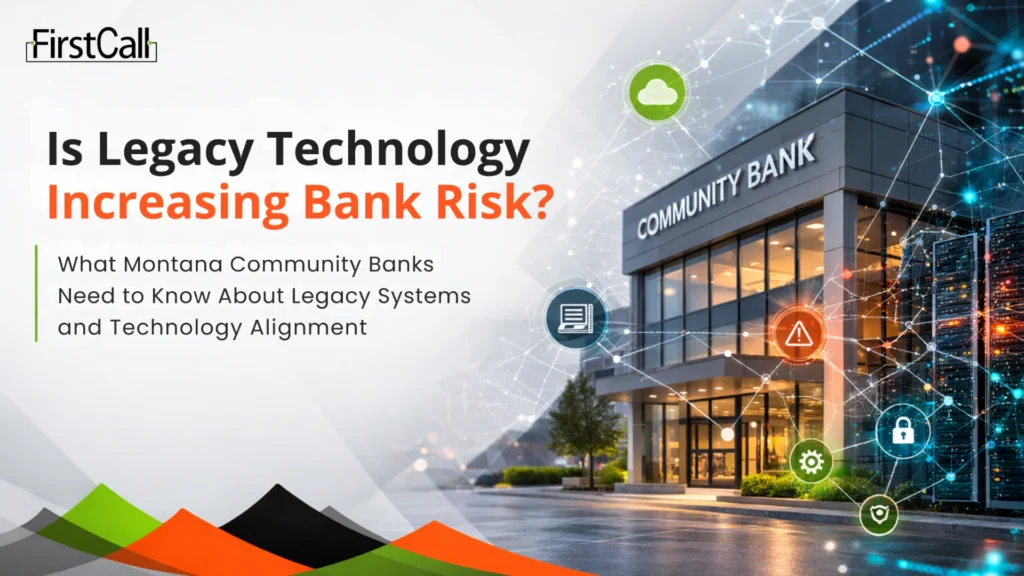
Legacy Tech Is Undermining Montana Banks
When people hear the phrase legacy systems, they often imagine ancient software running on dusty servers in a back room. Sometimes that is true. More often, legacy technology looks much more ordinary.