
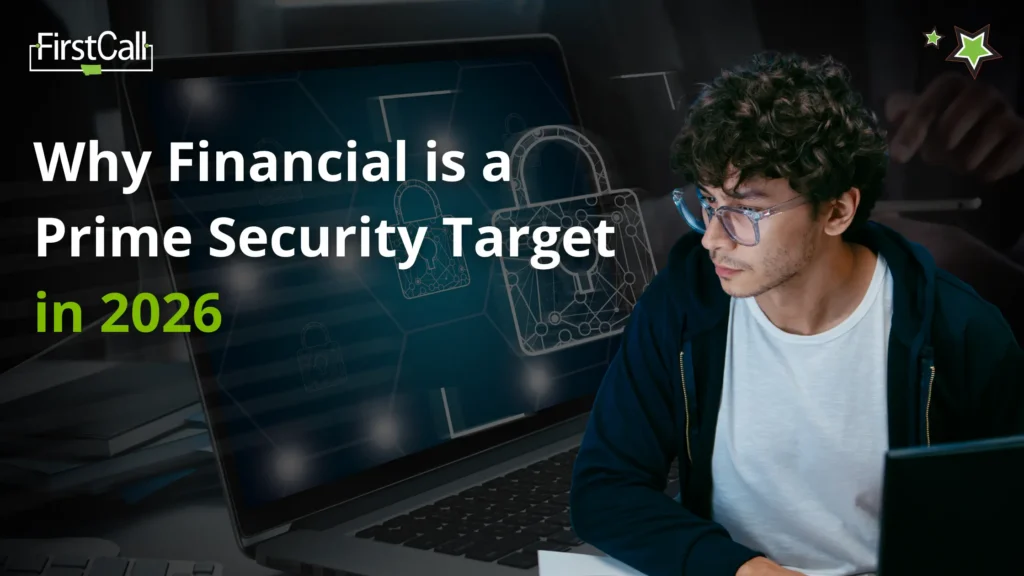
Cybercriminals target financial organizations because financial data is immediately valuable.
That includes banks, CPA firms, payroll companies, bookkeeping offices, tax preparers, wealth managers, insurance agencies, and any business handling sensitive financial information.
A compromised manufacturing company might expose operational data.
A compromised accounting or financial firm exposes Social Security numbers, tax returns, payroll records, bank account information, wire transfer access, and business financials.
Attackers know that data can be monetized quickly.
For Montana accounting firms and financial organizations, the bigger issue is that cyberattacks are becoming more frequent, more automated, and more financially damaging every year.
The numbers behind that trend are difficult to ignore.
Financial Firms Are Among the Most Targeted Industries
The financial sector consistently ranks among the most targeted industries for cybercrime worldwide.
According to KnowBe4’s 2025 Financial Sector Threat Report, financial institutions experience up to 300 times more cyberattacks than other industries. (KnowBe4)
The same report found:
- 97% of major U.S. banks experienced third-party breaches
- targeted intrusions against financial organizations increased 109% year-over-year
- nearly 45% of employees in large financial institutions were susceptible to phishing attacks during testing (KnowBe4)
That matters because most cyberattacks still begin with human error.
A single employee clicking the wrong link can expose an entire organization.
Financial Data Has Immediate Criminal Value
Healthcare data is valuable. Intellectual property is valuable.
Financial information is easier to monetize immediately.
Attackers target firms that store:
- taxpayer information
- banking credentials
- payroll systems
- wire transfer access
- investment account data
- Social Security numbers
- business financial records
Cybercriminals can use that information for:
- identity theft
- tax fraud
- account takeovers
- wire fraud
- ransomware extortion
- business email compromise attacks
The FBI’s 2025 IC3 Report showed reported cybercrime losses surpassed $20.8 billion in one year. Business email compromise alone accounted for more than $3 billion in losses. (Internet Crime Complaint Center)
Financial firms sit directly in the middle of those transactions.
Phishing and Email Attacks Still Work
Most firms picture cybersecurity threats as highly technical hacking attacks.
In reality, phishing remains one of the biggest entry points.
Attackers impersonate:
- clients
- banks
- payroll vendors
- IRS communications
- internal employees
- executives
The goal is usually one of three things:
- steal credentials
- gain access to email accounts
- trick employees into transferring money or exposing sensitive data
Recent Verizon breach research found the human element was involved in 62% of breaches.
The same report showed ransomware appeared in nearly half of investigated breaches.
For accounting firms, compromised email accounts are especially dangerous because attackers often monitor conversations quietly before attempting fraud.
Smaller Financial Firms Are Increasingly Targeted
One of the biggest misconceptions in the accounting industry is:
“Hackers only go after large firms.”
That is no longer true.
Smaller CPA firms, payroll providers, and bookkeeping offices are often easier targets because they typically have:
- smaller IT budgets
- fewer security controls
- outdated systems
- limited employee training
- weaker backup systems
At the same time, they still store highly sensitive financial data.
From an attacker’s perspective, that combination creates opportunity.
Cybercriminal groups increasingly automate attacks at scale, meaning they do not need to hand-pick targets anymore. They scan for vulnerable systems, weak passwords, exposed remote access tools, and unprotected email accounts.
A small Montana accounting office may never appear in the news after an attack, but that does not reduce the financial damage when client data is compromised.
Ransomware Continues to Grow
Ransomware remains one of the biggest operational threats facing financial organizations.
The financial sector continues to experience major increases in ransomware activity. OSec’s 2025 Financial Services Threat Report found ransomware incidents in financial services doubled year-over-year. (OSec)
Modern ransomware attacks are no longer limited to locking files.
Attackers now commonly:
- steal data before encryption
- threaten public release of client information
- target backups
- exploit cloud systems
- pressure organizations through extortion
For financial firms, that creates enormous liability because exposed data often includes taxpayer records, banking information, and personally identifiable information.
The reputational impact can be just as damaging as the operational disruption.
Third-Party Vendors Increase Risk
Financial firms rely heavily on third-party software and cloud platforms.
That includes:
- tax software
- cloud accounting systems
- payroll providers
- document management platforms
- managed IT providers
- email systems
Every vendor relationship creates another potential attack path.
Recent cybersecurity research found third-party involvement in breaches doubled from 15% to 30%. (DeepStrike)
Financial organizations are increasingly targeted through:
- software supply chain attacks
- compromised vendors
- weak integrations
- stolen vendor credentials
This is one reason the FTC Safeguards Rule requires firms to monitor vendor security practices instead of assuming providers handle everything automatically.
AI Is Making Cyberattacks More Convincing
Artificial intelligence is accelerating cybercrime.
Attackers now use AI to:
- write convincing phishing emails
- impersonate executives
- generate fake invoices
- create deepfake audio
- automate social engineering attacks
Axios reported that 45% of financial organizations experienced AI-powered cyberattacks within the past year. (Axios)
Financial firms are especially vulnerable because attackers can impersonate trusted relationships:
- clients
- payroll contacts
- executives
- banking representatives
- vendors
AI-generated phishing emails are often far more convincing than traditional spam campaigns because they mimic tone, writing style, and business context.
Remote Work Expanded the Attack Surface
Remote and hybrid work environments introduced major cybersecurity challenges for financial firms.
Employees now routinely access sensitive systems from:
- home offices
- personal devices
- coffee shops
- mobile phones
That creates additional risk when firms lack:
- MFA
- device management
- encrypted laptops
- secure remote access
- employee training
Cybersecurity research increasingly shows attackers target identity systems first because remote work depends heavily on cloud-based logins and email access. (DeepStrike)
A compromised Microsoft 365 account can quickly become a full-scale business breach.
Regulatory Pressure Is Increasing
Cybersecurity is no longer viewed as optional operational overhead in financial industries.
Regulators increasingly expect firms to maintain documented cybersecurity programs and written security policies.
For accounting and tax firms, that includes requirements tied to:
- the FTC Safeguards Rule
- GLBA
- IRS Publication 4557
- IRS Publication 5708
- state breach notification laws
Cyber insurance carriers are also raising requirements.
Many firms now discover after an incident that insurance claims can be denied if basic safeguards were missing, such as:
- MFA
- endpoint protection
- backups
- documented security policies
The legal and financial exposure from poor cybersecurity practices continues to grow.
Why This Matters for Montana Financial Firms
Many Montana accounting firms and financial businesses operate with lean teams.
That creates practical challenges:
- limited internal IT resources
- aging systems
- small administrative staff
- increasing compliance obligations
At the same time, client expectations continue to rise.
Clients assume their financial data is protected. Regulators assume firms are implementing safeguards. Cybercriminals assume smaller firms are easier to compromise.
That combination puts financial organizations under increasing pressure to modernize cybersecurity practices.
The Firms That Reduce Risk Usually Focus on Fundamentals
The good news is that many successful attacks still rely on preventable weaknesses.
The firms in the strongest position typically have:
- MFA enabled everywhere possible
- secure backups
- employee cybersecurity training
- endpoint protection
- email filtering
- documented policies
- restricted administrative access
- vendor oversight procedures
- incident response planning
Those fundamentals reduce risk significantly.
They also help firms comply with FTC Safeguards Rule expectations and cyber insurance requirements.
Where First Call Can Help
Most accounting and financial firms do not have internal cybersecurity teams.
That’s why many organizations work with a managed IT provider to help oversee security, compliance readiness, backups, monitoring, and incident response planning.
First Call helps Montana businesses strengthen cybersecurity protections through:
- managed IT support
- endpoint protection
- secure backups
- MFA implementation
- employee security training
- email security
- compliance-focused IT guidance
- cybersecurity risk assessments
For financial firms, proactive cybersecurity management is increasingly part of doing business safely and responsibly.
A single compromised email account or ransomware event can create operational, legal, financial, and reputational consequences that last for years.